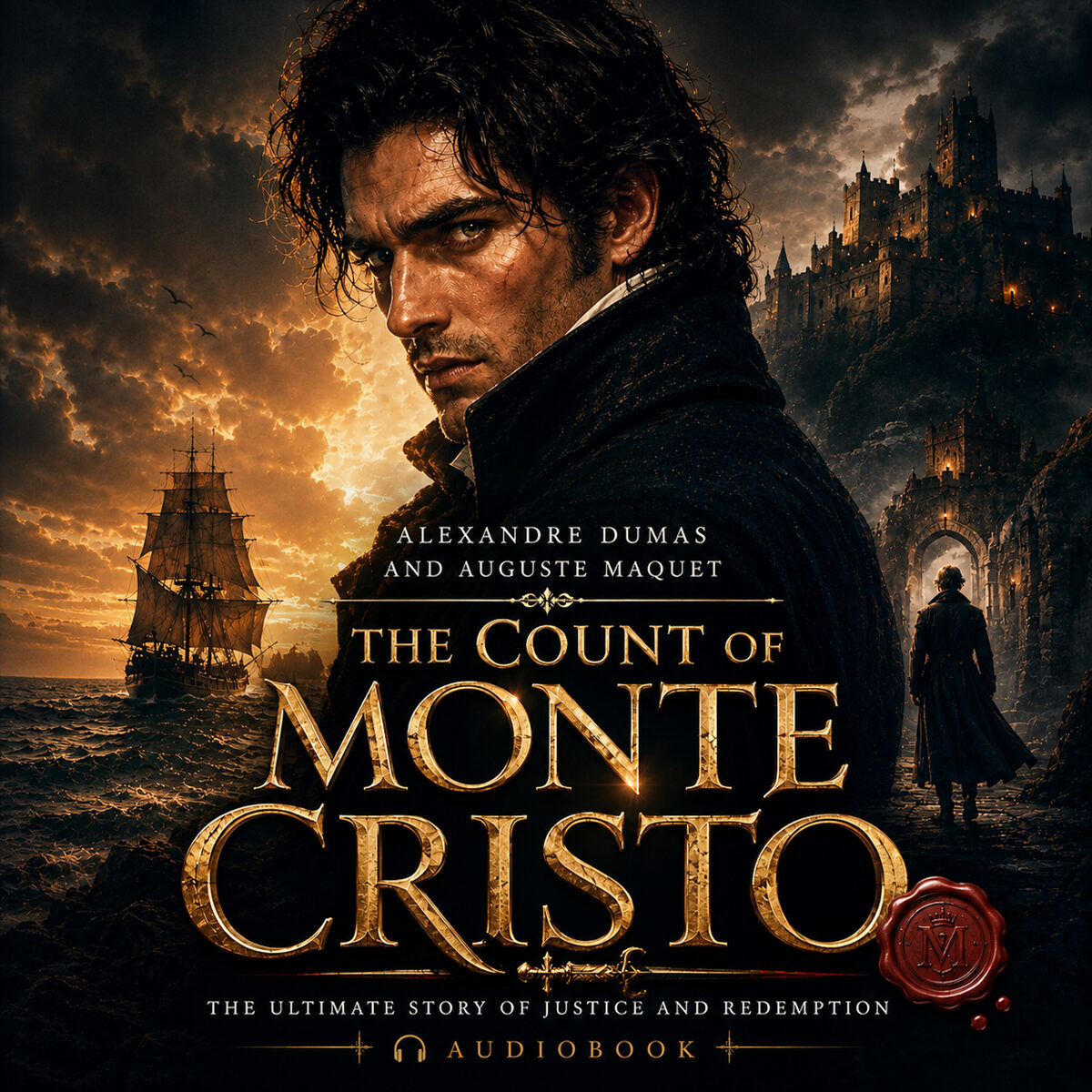
Revenge in The Count of Monte Cristo arrives dressed as justice, served with excellent timing, and occasionally accompanied by a very expensive dinner. Yet the novel keeps asking whether the person who pours vengeance can avoid drinking it. The phrase “a bitter draught” captures that cost: punishment may hurt the target, but it also keeps the avenger tied to the injury.
The quotation and its speaker
The complete familiar wording is, “Hatred is blind; rage carries you away; and he who pours out vengeance runs the risk of tasting a bitter draught.” The speaker is Edmond Dantès as the Count of Monte Cristo, reflecting on the very force that drives his transformation. English translations vary in punctuation and vocabulary, so this wording should be checked against the edition a reader is using.
The line belongs to a novel in which revenge is both entertainment and moral experiment. Dantès has been falsely imprisoned by Danglars, Fernand, and Villefort. After Abbé Faria educates him and the treasure gives him resources, he returns under new identities. He does not lash out randomly; he studies weaknesses, builds evidence, and designs punishments that mirror each enemy’s vice. The sophistication makes the revenge satisfying—and makes its consequences harder to dismiss.
Why “draught” is the right metaphor
A draught is something swallowed. It enters the body of the person who takes it, not just the person who receives it. That is the key to Dumas’s image. The Count’s plans require him to revisit old names, rehearse old humiliations, and watch the damage unfold. He gains power, but the past remains the organizing principle of his life. A victory can therefore taste like proof and poison at once.
“Pours out” also suggests ritual. The Count imagines himself administering a sacred judgment, almost as if he were a priest or Providence. That self-image helps him act, but it can excuse overreach. Once a person believes he is the instrument of a higher justice, ordinary questions—Who will be harmed? Is the punishment proportionate? What if I am wrong?—can seem like obstacles rather than obligations.
Revenge versus accountability
The novel does not ask readers to tolerate betrayal. It recognizes that public truth and legal accountability matter, particularly when institutions have protected powerful wrongdoers. The difference is that accountability aims to stop harm and establish responsibility; revenge aims to make the other person feel the avenger’s pain. Those goals can overlap, but they are not identical.
That distinction explains why the Count’s moral crisis arrives late. He can control the scheme, but he cannot control every human result. When innocent lives are endangered, the revenge story turns inward. The Count must decide whether completing the plan matters more than preserving the people who did not cause his original suffering. The bitter taste is his recognition that cleverness cannot remove responsibility.
A modern example
After a friendship ends badly, a person may want to reveal private messages or recruit mutual friends to punish the former friend. A healthier form of justice could be a clear boundary, a truthful account to the people who need it, and no further access to the relationship. It may feel less cinematic than a carefully timed social-media ambush. It also leaves the injured person with more freedom, which is a better treasure than one perfect final post.
Takeaway: Dumas’s bitter draught is not a command to suppress anger; it is a warning to choose remedies that do not become a second captivity. Pair this article with “Hatred Is Blind” and the site’s revenge themes analysis.