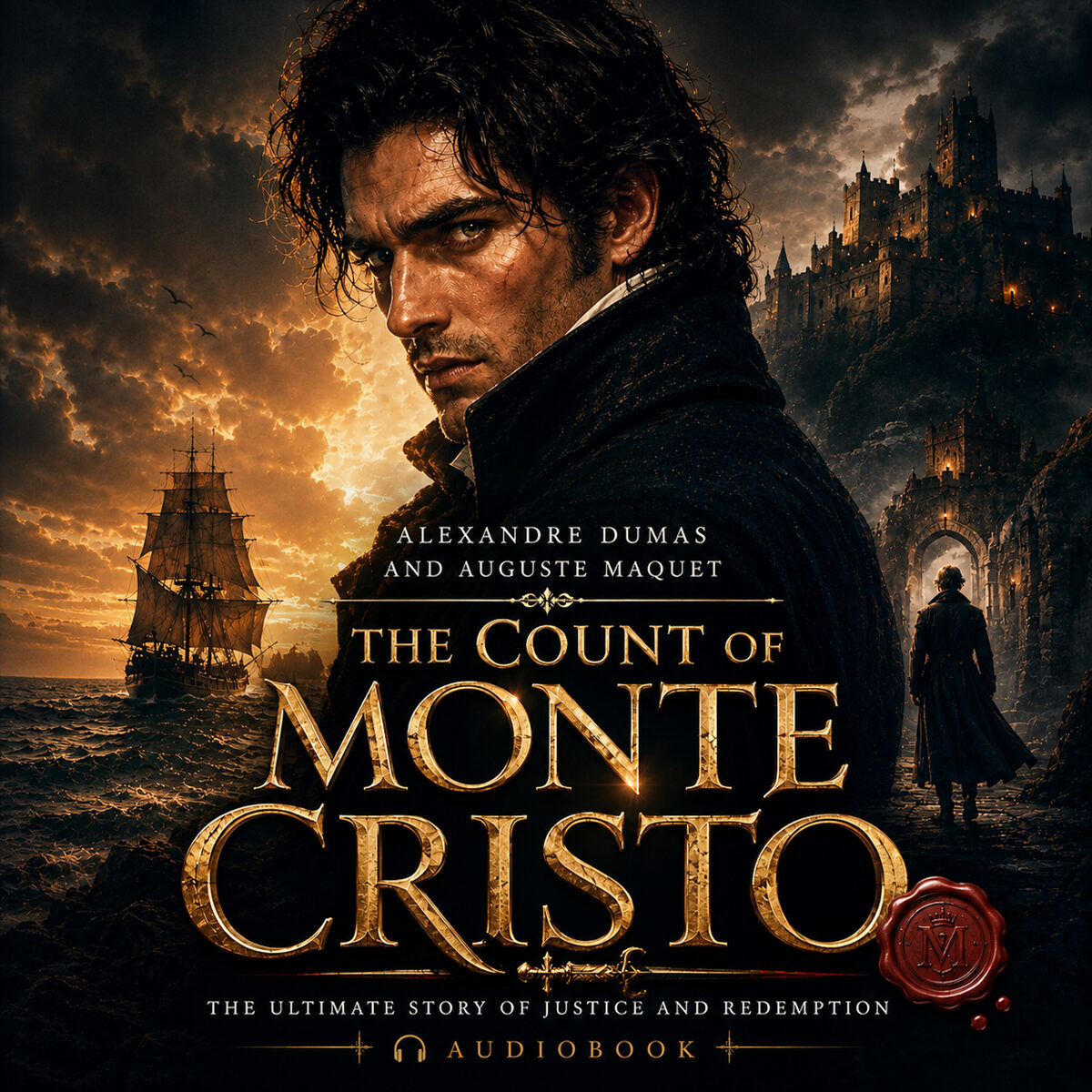
“How did I escape? With difficulty. How did I plan this moment? With pleasure.” The exchange is funny because the first answer is obvious and the second is unexpectedly honest. In a novel where the Count can make almost any entrance look effortless, Dumas lets him admit that the pleasure was in the work: the preparation, the details, and the delicious knowledge that a plan is finally moving.
Speaker and story context
The speaker is Edmond Dantès as the Count of Monte Cristo, describing his escape from the Château d’If and the revenge plans that followed. Public-domain English translations differ slightly in punctuation and wording. The scene recalls the physical difficulty of escaping prison as well as the intellectual pleasure of designing a new life. It is a compact summary of the Count’s transformation from powerless prisoner to strategic actor.
Dantès does not escape through luck alone. Faria’s tunnel, instruction, and companionship teach him how to think. After Faria’s death, Dantès uses the burial sack and the sea to make freedom possible. The ordeal is dangerous and nearly fatal. “With difficulty” is therefore not false modesty. It acknowledges labor that a glamorous retelling might hide.
Why planning feels pleasurable
Planning gives Dantès a form of agency prison denied him. In the cell, every day is controlled by other people. In a plan, he can imagine sequences, contingencies, and choices. The pleasure is partly creative—the pleasure of making a route through obstacles—and partly emotional: each detail proves that the future has not been completely stolen.
There is a darker note too. Dantès enjoys planning revenge because planning lets him rehearse power before using it. The careful structure separates him from the raw panic of his past. That distance helps him succeed, but it can also make human suffering look like a satisfying piece of architecture. Dumas allows the joke to sparkle while leaving the moral discomfort intact.
Effort, process, and the modern reader
The quote is not a celebration of overwork. Difficulty is not automatically noble, and a plan that consumes every relationship may be a bad plan. Its useful insight is that process can contain meaning. When a result is delayed, the work of preparing can build skill, confidence, and options. Success feels different when you know the invisible steps that made it possible.
A good modern plan includes an exit route. Dantès’s early schemes rarely do; they are designed for control. A healthier project plan names assumptions, checkpoints, and what would make you stop. Pleasure then comes from learning and adapting, not from forcing reality to obey a script.
A concrete example
Planning a move to a new city can be exciting: compare neighborhoods, build a budget, research transit, and schedule conversations. The move may still be stressful, but the preparation turns a vague wish into manageable decisions. Even a small project—hosting dinner, studying for a certification, or changing careers—benefits from the Count’s lesson: respect the difficulty, then enjoy making the route.
Takeaway: the quote pairs honest effort with the joy of deliberate action. Read it beside active patience and Dumas’s art of plotting. The best plan is not the one that looks effortless; it is the one that makes difficulty useful.