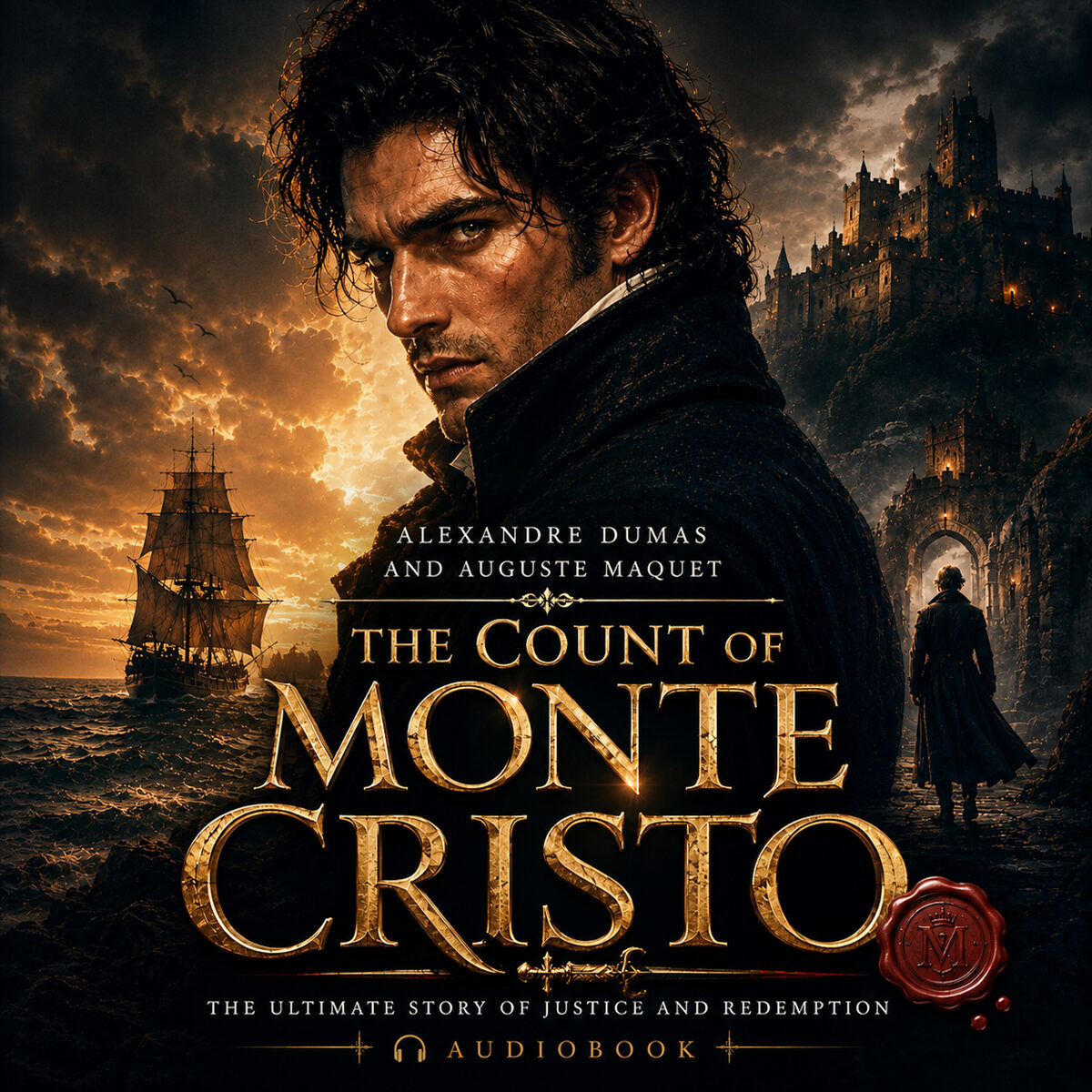
“God is always the last resource.” The sentence is brief enough to fit on a bookmark, but its meaning is not simple. It can sound like a criticism of people who pray only after trying everything else, or like a compassionate description of what desperation does to human beings. In The Count of Monte Cristo, it belongs to a novel that takes both faith and human action seriously.
Speaker and context
The line is associated with Edmond Dantès’s reflections on suffering, Providence, and the limits of human rescue. Public-domain translations differ in wording and placement, so readers should consult their edition for the exact chapter. The thought belongs to the spiritual atmosphere shaped by Abbé Faria and by Dantès’s years in the Château d’If, where prayer, despair, and practical ingenuity exist side by side.
When Dantès enters prison, he expects human authorities to correct the mistake. They do not. He waits for an appeal, a visitor, or a sign of justice, and each hope fails. His relationship with Faria provides a different kind of rescue: not magic, but companionship, education, and a method for acting. Faith in the novel does not remove the need to learn how the world works.
Plain-English meaning
“Last resource” means that people often turn to God when their own plans and institutions have run out. The line notices a human pattern: we prefer control, evidence, money, influence, and expertise until those tools fail. Only then do we admit how much remains beyond our command. That admission may be humility, fear, or both.
The sentence does not prove that late faith is fake. A person may discover genuine spiritual depth in a crisis. Nor does it say that someone should wait for divine rescue instead of seeking medical care, legal help, or community support. Dantès’s own survival depends on concrete human connection. Prayer and action are not opposites here; desperation exposes the need for both.
Providence and the Count’s mistake
The Count later turns Providence into a justification for his revenge. Because he has been rescued and given extraordinary resources, he assumes that his plan expresses a divine design. The novel eventually questions that certainty. Faith can make a person more humble before mystery, but it can also become dangerous when used to certify every personal desire.
This makes the quote a quiet companion to “Wait and hope.” Hope recognizes that the future is not ours to command. The Count’s best moments combine preparation with humility; his worst moments confuse a successful plan with a morally approved one. Dumas’s spiritual language is therefore a test of character, not merely decoration.
A modern example
After a business fails, someone may seek advice only after exhausting savings and relationships. A healthier pattern is to build support before the emergency: maintain community, ask for help early, and leave room for spiritual practice if it matters to you. Faith should not be a reason to refuse expertise. It can be the framework that helps a person use expertise without believing it makes them invulnerable.
Takeaway: the quote names the humility found at the edge of control. Read it with “Wait and Hope” and the novel’s religion and faith analysis. The last resource may be spiritual, but the next wise action is often very practical.