Quick answer
Start with Monte Cristo for an expansive revenge adventure, or choose The Black Swan first when piracy, deception, loyalty, romance, and seafaring action better matches your present reading interests and available time.
Direct recommendation
Should a reader start with The Black Swan or The Count of Monte Cristo? Start with Monte Cristo for an expansive revenge adventure, or choose The Black Swan first when piracy, deception, loyalty, romance, and seafaring action better matches your present reading interests and available time.
Why The Black Swan belongs in this conversation
The Black Swan by Rafael Sabatini enters a useful conversation with Alexandre Dumas's novel through piracy, deception, loyalty, romance, and seafaring action. That connection can help a reader choose a next book, but a recommendation is not a claim that the two works are interchangeable. Different publication histories, genres, cultures, narrative voices, lengths, and translations create different experiences.
This guide is designed for discovery rather than a guaranteed personal match. Reading enjoyment depends on taste, edition, translation, accessibility needs, tolerance for spoilers, and available time. Descriptions here stay broad so that first-time readers can compare interests without having each plot resolved in advance.
Some books are difficult because their language is dense. The Count of Monte Cristo is difficult in a different way: it keeps opening new doors. The Black Swan or The Count of Monte Cristo: Which Should You Read First? gives us one useful door to open. We can ask should a reader start with the black swan or the count of monte cristo? That sounds like a small question, but Dumas uses small questions to reach large ideas about memory, power, love, and the stories people tell about themselves. This guide keeps the language clear while respecting the novel’s complexity.
Here is the quick answer: Start with Monte Cristo for an expansive revenge adventure, or choose The Black Swan first when piracy, deception, loyalty, romance, and seafaring action better matches your present reading interests and available time. That answer is a starting point, not a replacement for the scenes. The pleasure of Monte Cristo comes from watching an idea change under pressure. A promise can become a burden. A disguise can feel like freedom and then become a trap. A generous act can carry a debt. The book expects us to notice those shifts, and they are exactly what make it a useful classic for readers of different ages.
The most helpful lens for this article is a balanced first-book comparison using pace, length, difficulty, and piracy, deception, loyalty, romance, and seafaring action. Edmond Dantès does not operate in an empty world. His choices touch families, businesses, courts, friendships, and public reputations. When one person enters a room with more knowledge than everyone else, the room changes. When that person also has money, time, and a reason to hide, the change becomes dramatic. Dumas turns social detail into plot, which is why a discussion of one side character or one setting can open the entire novel.
Edmond’s transformation gives the subject its emotional center. Before prison, he believes that honest work and good intentions will be enough to carry him into a decent future. The betrayal around him proves that systems can reward confidence, connections, and silence instead. Abbé Faria gives him education, but education also gives him a sharper view of injustice. The Count is born from that mixture of knowledge and pain. He can read a situation more clearly than the young sailor could, yet seeing clearly does not tell him what he ought to do.
This is why the novel remains readable for a new generation. Its surface has ships, treasure, secret names, lavish dinners, and dramatic entrances. Its emotional questions are familiar: Who gets believed? What does a family owe its past? Can a person become someone new? Is being successful the same as being safe? The settings have changed, but the pressure behind them has not. Readers can enter through adventure and stay for a conversation about choices.
Dumas also understands information as a form of power. A letter can be more dangerous than a weapon when the wrong person reads it. A family tree can change the meaning of a marriage. A title can open a door before anyone checks whether it is deserved. The Count’s advantage is not simply that he is rich. It is that he knows what other people want to believe. He offers them a version of himself that fits their expectations, then watches what they reveal.
A careful reading should still leave room for criticism. It is tempting to treat Edmond as a perfect strategist because the novel makes his entrances so satisfying. But a plan is not morally perfect just because it is clever. The people around the guilty can suffer. The Count can mistake control for wisdom. The later story is powerful because consequences interrupt the fantasy of total command. We can celebrate a villain’s exposure and still ask whether the punishment repairs the harm or creates a new one.
The historical world helps explain why these risks feel so serious. In nineteenth-century France, class, political loyalty, inheritance, and reputation were not background decoration. They shaped where a person could live, whom they could marry, what work they could do, and which accusations might destroy them. A social visit could be strategic. A dinner could be an examination. A name could function like a passport. Once those rules are visible, the plot’s elaborate manners become as tense as a chase.
For audiobook listeners, this topic is a good reason to slow down rather than rush. Put the story on during a walk, commute, or quiet household task, then pause at the end of a chapter and write one sentence. Record the new fact, the changed relationship, or the unanswered promise. Ten minutes of focused listening is more useful than an occasional marathon if the goal is to remember the architecture of the story. The audiobook also makes the many voices and identities easier to feel as performances.
A useful discussion prompt is this: what would change if the character had told the truth earlier? That question does not erase the political danger or the original betrayal. It simply helps us see how silence compounds a problem. In Monte Cristo, people hide information to protect love, money, careers, pride, or social position. Their reasons are understandable, but understandable reasons can still produce devastating results. That is one of Dumas’s most modern insights.
The article’s central idea also connects to the novel’s treatment of hope. Hope is not the same as optimism, and it is not a promise that every wrong will be reversed. For Edmond, hope becomes possible only after he learns, suffers, plans, and finally recognizes the limits of his own judgment. For the people he helps, hope often arrives as a practical act: a debt paid, a truth spoken, a safe passage opened, or a future allowed to continue. Small forms of hope keep the epic human.
Readers may disagree about the details, and that is healthy. One person will see a thrilling revenge machine; another will see a warning about obsession. Someone else will focus on politics, family, translation, or the audiobook experience. The text can hold these readings because it is built from contrasts. It wants us to admire intelligence and fear its misuse. It wants us to value loyalty and notice how loyalty can become dependence. It gives us a hero who is easiest to understand precisely when he is hardest to excuse.
If you are taking notes, keep three headings: evidence, feeling, and consequence. Under evidence, record what the character knows or does. Under feeling, record what the scene makes you notice. Under consequence, record who benefits and who is placed at risk. This simple method works for a class essay, a reading club, or a private reading journal. It also stops the plot from becoming a blur of names. Monte Cristo rewards readers who can connect a vivid moment to the larger pattern.
The final takeaway is not that every reader should become a master planner with a dramatic cape. It is that identity is built through repeated choices. Edmond is changed by what happens to him, but he is also changed by what he decides to do with the knowledge he gains. The supporting characters make that point clearer because they respond to pressure in different ways. Some protect others. Some remain silent. Some chase status. Some admit the truth. Their differences make the novel feel like a collection of possible lives.
That brings us back to the black swan or the count of monte cristo: which should you read first?. The topic matters because it makes the huge novel easier to enter without making it smaller. Whether you are researching a character, preparing for a book-club conversation, choosing an edition, or simply wondering what the famous story is really doing, the answer is layered. Start with the clear fact, read the scene in context, and then ask who has power at that moment. You will find that Dumas’s old adventure is still asking very current questions.
The Count of Monte Cristo lasts because its pleasures are generous. It gives us suspense, romance, humor, history, and spectacle, then asks us to think about what those pleasures conceal. A reader can enjoy the reveal and revisit it later with more sympathy for the people standing outside Edmond’s plan. That second reading is not less exciting. It is larger. The story becomes not only a fantasy of escape, but a study of how a person lives after escape has been achieved.
A spoiler-light comparison
The safest starting point is structure and reading experience. The Count of Monte Cristo is an expansive serialized novel whose delayed returns, aliases, social networks, and long consequences reward patience. The Black Swan should be approached on its own terms. Similar subject matter can produce a very different pace, scale, emotional tone, or moral argument.
Look for a pattern rather than one matching event. A prison, disguise, fortune, betrayal, voyage, courtroom, romance, or revenge may appear in many books, but its meaning changes according to narration and consequence. The strongest comparison explains how each writer shapes attention and judgment.
What Monte Cristo readers may appreciate
- Connection: piracy, deception, loyalty, romance, and seafaring action.
- Story architecture: watch how information is revealed, delayed, repeated, or concealed.
- Character change: compare who can reinvent a public identity and what that transformation costs.
- Moral pressure: distinguish exciting action from the book's judgment of its consequences.
- Historical setting: verify context rather than treating fiction as a complete historical record.
Important differences to preserve
Recommendation pages often flatten books into tags such as “revenge,” “adventure,” or “classic.” Those labels are useful entry points, not full interpretations. A comparison should identify differences in narrator, chronology, realism, humor, violence, romance, religion, politics, class, empire, race, gender, and intended audience when they matter.
Do not assume that two books share an ethical conclusion because both contain a similar action. Dumas can make planning exhilarating and then expose its human cost. Another author may use comparable material for tragedy, satire, mystery, spiritual reflection, social criticism, or psychological study.
Which book should you choose right now?
Choose The Count of Monte Cristo when you want a long, plot-rich journey through betrayal, imprisonment, education, treasure, aliases, Parisian society, revenge, and moral reconsideration. Choose The Black Swan when its particular emphasis on piracy, deception, loyalty, romance, and seafaring action sounds more immediately appealing.
Available time matters. Compare the actual editions in front of you rather than relying on universal page counts. Type size, translation, abridgment, annotations, and audio production can change apparent length. Sampling a chapter or legal preview can reveal more about fit than a numerical rating.
Print, ebook, and audiobook considerations
For translated works, identify the translator and whether the text is complete. For older English-language works, check whether notes would make historical vocabulary easier to follow. For ebooks, test navigation, footnotes, font controls, contrast, and screen-reader behavior.
For audio, listen to the sample before committing. Narrator pace, character distinction, pronunciation, volume consistency, and chapter labeling can affect comprehension. Confirm whether the recording is unabridged and whether its chapter sequence matches any print guide you plan to use. Catalogue availability varies by service, account, and region.
A two-book reading plan
- Read or listen to the first book without forcing comparisons into every chapter.
- Keep a short list of recurring concerns such as justice, identity, loyalty, money, confinement, or homecoming.
- Record one scene from each book that changes your judgment of a central character.
- After finishing both, compare beginnings, turning points, endings, and the consequences of concealed information.
- Write one important similarity and one important difference supported by specific scenes.
Questions for a book club or reading journal
- Which book creates suspense by withholding information more effectively for you?
- How does each book connect private choices with law, class, family, or political power?
- When does reinvention become freedom, performance, deception, or self-loss?
- Which secondary character most changes the moral meaning of the central plot?
- Does the ending confirm, complicate, or reject the protagonist's earlier idea of justice?
How to make a fair comparison
Use named editions and cite exact locations when writing academically. Separate observation from evaluation: first describe narrative voice, scene order, imagery, dialogue, pacing, and outcomes; then explain their effects. Avoid claiming that one work “copied” another without reliable publication history and evidence of influence.
Translations are interpretations. Wording, sentence length, register, names, titles, and chapter divisions may vary. An audiobook performance adds another interpretive layer. Attribute the version instead of presenting one English phrase or one narrator's emphasis as universal.
Who may prefer each experience?
Readers who enjoy elaborate plotting, delayed recognition, large casts, and the gradual transformation of revenge into moral uncertainty may prefer Dumas. Readers especially drawn to piracy, deception, loyalty, romance, and seafaring action may prefer The Black Swan. Many readers will value both for different reasons.
No age, profession, nationality, or identity guarantees a preference. Content sensitivities also vary, so consult a reliable edition description or content guide when depictions of violence, imprisonment, abuse, prejudice, death, or historical injustice affect your choice.
Frequently asked questions
Is The Black Swan exactly like The Count of Monte Cristo?
No. The comparison highlights piracy, deception, loyalty, romance, and seafaring action, not an identical plot, style, or conclusion.
Must I finish Monte Cristo first?
No. The works can be read independently. Reading order should reflect interest, time, edition, and spoiler preferences.
Should I choose an abridged edition?
An abridgment may save time but can remove supporting plots and context. Check the editor's description and label the version accurately.
Can I compare audiobook performances?
Yes. Compare pace, pause, emphasis, pronunciation, character distinction, completeness, and chapter organization while separating performance choices from the written text.
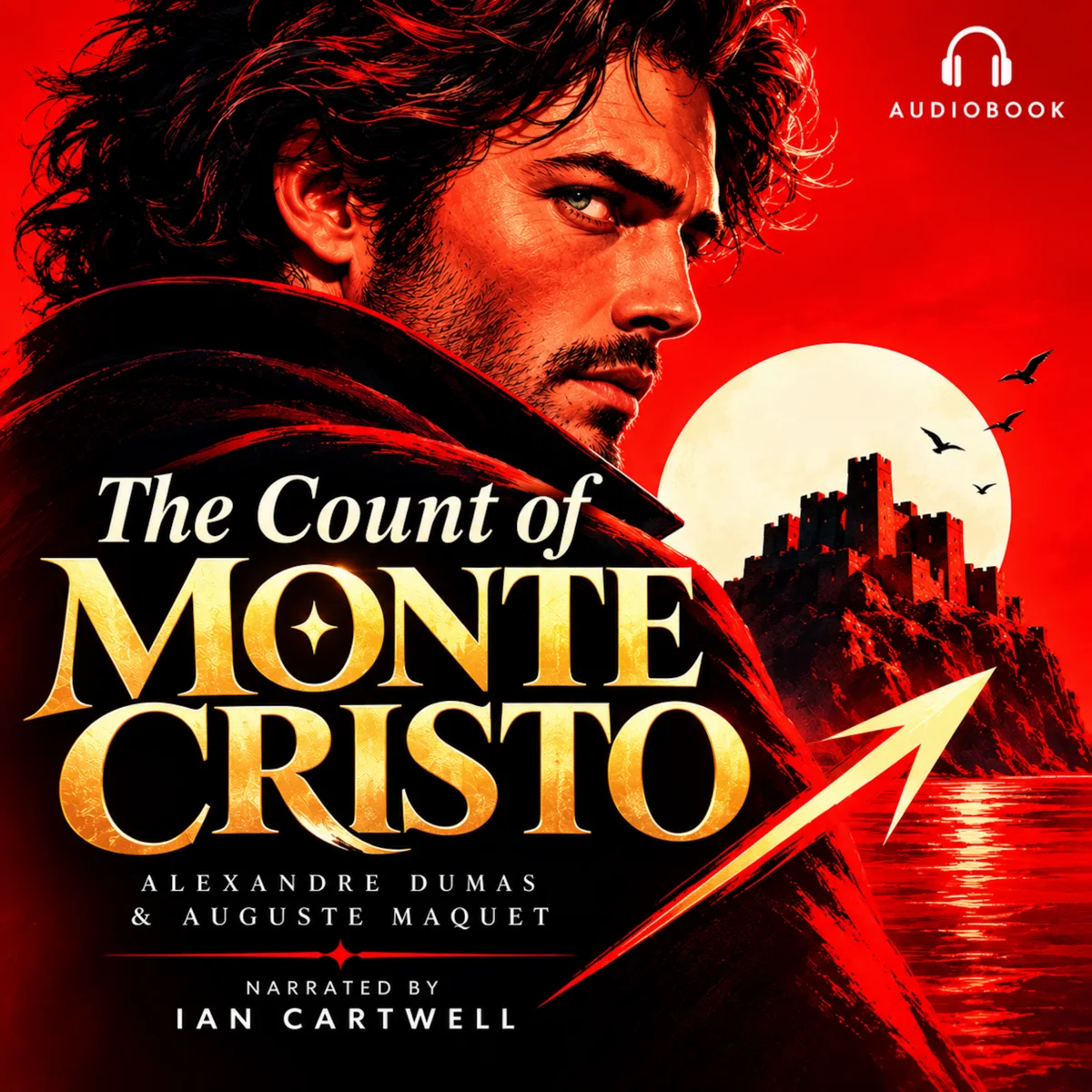
Where can I listen to The Count of Monte Cristo?
Use the linked cover in either recommendation section on this page to open the current Spotify listing. Availability may vary by account and region.
Frequently asked questions
Should a reader start with The Black Swan or The Count of Monte Cristo?
Start with Monte Cristo for an expansive revenge adventure, or choose The Black Swan first when piracy, deception, loyalty, romance, and seafaring action better matches your present reading interests and available time.
Why does this topic matter in The Count of Monte Cristo?
It connects a balanced first-book comparison using pace, length, difficulty, and piracy, deception, loyalty, romance, and seafaring action to the novel's larger questions about identity, justice, time, and hope.