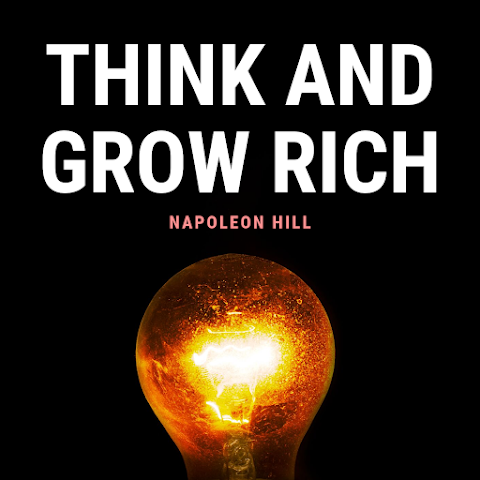
Real talk — your 20s are the most underrated decade of your life when it comes to building wealth. Not because you'll make the most money (you probably won't), but because time is the most valuable asset in the wealth equation, and you have more of it than anyone else. Napoleon Hill's Think and Grow Rich was written in 1937, but every single principle in it hits 10x harder when you apply it in your 20s. Here's the actual playbook — no toxic productivity, no manifestation nonsense, just the real moves.
Why Your 20s Are the Cheat Code (If You Use Them Right)
Hill spent 20 years interviewing 500 of the wealthiest people in history. The pattern that showed up most consistently? Almost all of them had built the foundational habits — the burning desire, the definite chief aim, the daily auto-suggestion practice — long before they'd accumulated significant wealth. The wealth followed the mindset by years, sometimes decades. The 20-something who installs these mental operating systems early is compounding mental capital while everyone else is still figuring out what they want to do with their life.
Compound interest gets all the attention. But compound discipline is just as powerful. Every habit you build in your 20s — the saving habit, the reading habit, the goal-setting habit, the relationship-building habit — is generating returns for the next 60 years of your life. The math is wild when you actually run it.
Step 1: Pick Your Major Definite Purpose (Not "Be Successful")
Hill's first principle is desire — but specifically, a definite desire. "I want to be rich" doesn't count. "I want to build a six-figure freelance design business by age 28 by serving early-stage SaaS startups" — that counts. The specificity is not optional. It's what gives your brain something concrete to organize around.
In your 20s, this might feel uncomfortable because you genuinely don't know yet. That's fine. Pick the best version you can articulate today, write it down, and start moving toward it. You'll refine it as you learn more about yourself and the world. The worst thing you can do is wait until you're "sure" — that day never comes for anyone, and meanwhile the years pass.
Step 2: Build the Daily Auto-Suggestion Habit Now
Read your written goal aloud, twice a day — once when you wake up, once before sleep. With genuine emotion, not mechanical recitation. Hill's research showed this practice was nearly universal among his successful subjects. In your 20s, you have the rare advantage of being able to install this habit before life gets complicated with mortgages, kids, and decades of accumulated cynicism. Build the muscle now. It will pay dividends every year for the rest of your life.
Step 3: Find Your First Mastermind
You will not build anything significant alone. Hill's Mastermind principle says to assemble a small group of people whose skills and perspectives complement yours, who share your commitment, and with whom you operate in genuine harmony. In your 20s, this is easier than it will ever be — your peers are also figuring it out, also ambitious, also reachable. The Mastermind you build at 25 might be the foundational alliance of your entire career. Don't underestimate the power of three or four serious friends who hold each other to a high standard.
Step 4: Specialized Knowledge Beats General Knowledge — Always
School gave you general knowledge. The market pays for specialized knowledge. In your 20s, pick one or two areas where you can be genuinely elite within five to ten years, and pour into them relentlessly. Online courses, books, mentorship, real-world reps — whatever it takes. The generalist with broad average skills earns an average salary. The specialist who solves specific problems better than almost anyone else earns multiples of that. Hill was clear about this in 1937. It's even more true now in an economy that rewards depth over breadth.
Step 5: Start Saving and Investing — Yes, Even With Small Amounts
The habit of saving is one of Hill's foundational principles, and the math of compounding makes starting in your 20s genuinely magical. The 22-year-old who invests $200 a month consistently will outperform the 35-year-old who invests $500 a month, by a wide margin, by retirement age. Time is the variable you can't buy back later. Start now, even if the amounts feel small. The habit is more important than the dollar amount in the early years.
Step 6: Treat Setbacks as Curriculum
Your 20s are going to include failures. Probably significant ones. Hill's framework is clear: every adversity carries the seed of an equivalent benefit. The job that doesn't work out teaches you what you actually want. The business that fails reveals the assumption that needed correcting. The relationship that ends forces the self-knowledge you wouldn't have gotten otherwise. The mindset that processes failure as information rather than verdict is one of the most valuable assets you can build, and your 20s are the perfect decade to install it.
The Bottom Line
Your 20s are not the decade for results. They're the decade for installing systems. The desire, the faith, the auto-suggestion, the Mastermind, the specialized knowledge, the saving habit — these are the systems that produce results in your 30s, 40s, and beyond. Hill's research showed this pattern across hundreds of successful lives. The earlier you install them, the more they compound. The playbook from 1937 still works. The only question is whether you're going to use it.