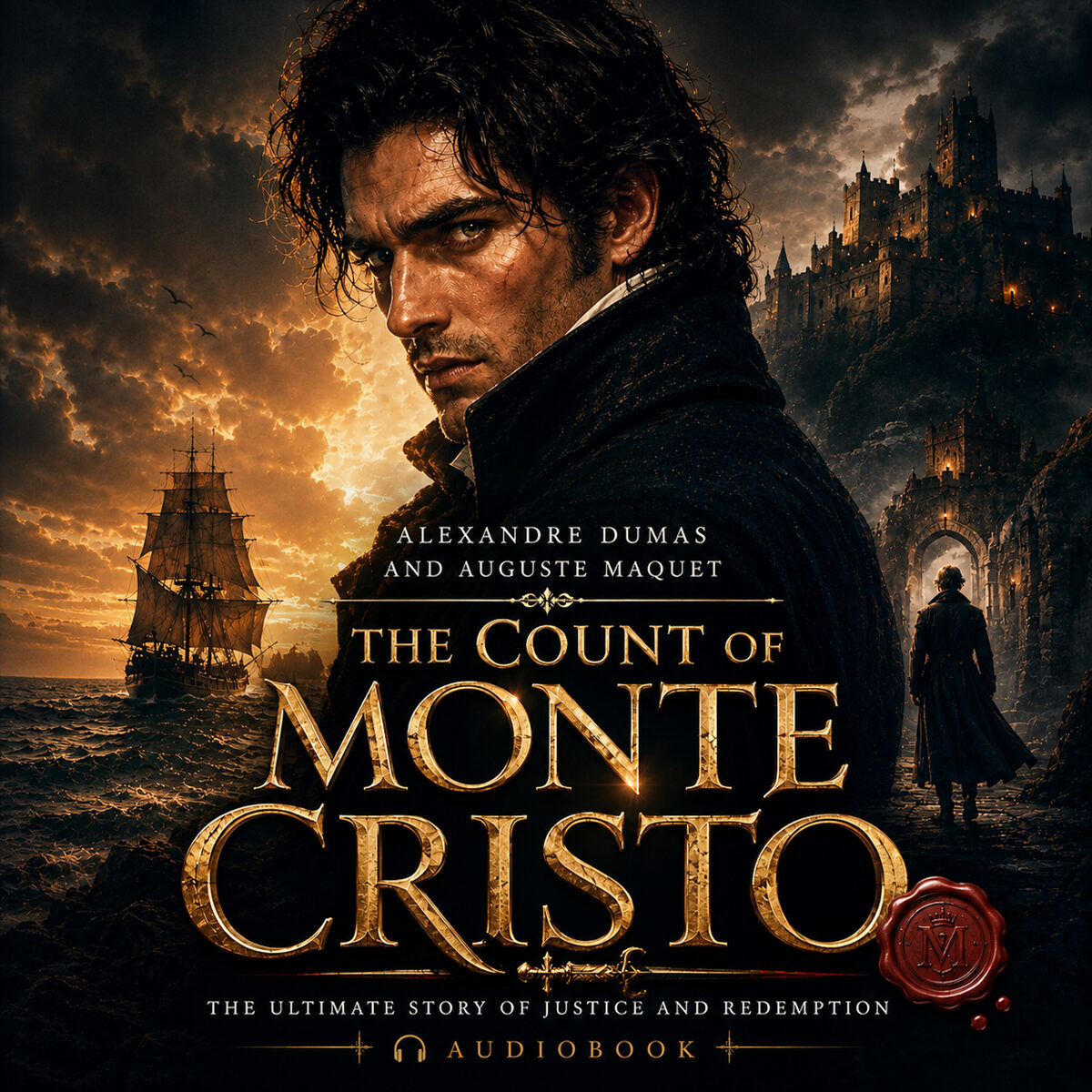
“He felt that he had passed the boundary beyond which one may not go, the boundary traced by the finger of God.” This is not a triumphant one-liner spoken by the Count. It is a moment of narration, and that matters. The prose steps back from Edmond Dantès’s grand self-image and lets him recognize a limit he has treated as someone else’s problem.
Where the line appears
The sentence occurs late in the revenge arc, after the Count’s actions have produced consequences beyond the intended targets. Exact chapter numbering depends on the edition and translation; the familiar English wording comes from a public-domain translation and can differ in small details. The speaker, strictly speaking, is the narrator describing Dantès’s realization, not a character delivering a speech.
Dantès has spent years turning himself into an almost supernatural agent. Wealth lets him appear everywhere; disguises let him become anyone; information lets him anticipate other people’s moves. He tells himself that he is balancing the moral scales by rewarding the good and punishing the wicked. The boundary image punctures that confidence. Human judgment has limits even when human resources seem limitless.
Plain-English meaning
The sentence means: I have crossed from holding a wrongdoer accountable into claiming authority over life, death, and consequences that are not mine to control. “The finger of God” gives the boundary religious force, but readers can also understand it as conscience, proportionality, or the recognition that no person sees the whole moral picture.
It is significant that the boundary is traced, not built like a wall. A traced line may be easy to overlook while planning a route. The Count’s schemes are so elaborate that he sees obstacles clearly but misses the ethical border. Only when an innocent person suffers does the invisible line become visible. The novel’s suspense is therefore moral as well as plot-driven: how long can a brilliant planner continue without admitting that he is responsible?
Overreach and the shape of justice
Dumas does not erase Dantès’s original injury. His imprisonment was real, and the conspirators benefited from it. But the scale of his response creates a new question: can a just cause become unjust through its method? The answer is uncomfortable because the Count is often right about the guilt of his enemies. Being right about guilt does not make every punishment right.
This is why the moment feels like a turning point rather than a conclusion. Dantès cannot become his younger self again, but he can stop treating remorse as weakness. His moral awakening does not make the prior damage disappear. It opens the possibility of mercy, which is harder than revenge because it gives up the fantasy of total control.
A modern example
Imagine a manager discovering that an employee falsified a report. An investigation and proportionate discipline may protect the team. Public humiliation, secret retaliation, and punishment of the employee’s family would cross a boundary even if the original wrongdoing were proven. The practical test is simple: does the response repair safety and truth, or does it create suffering mainly because suffering feels deserved?
Takeaway: the traced boundary is the novel’s warning against moral overreach. Read it with our Providence and hubris analysis and moral ethics overview. Justice needs courage, but it also needs a line the powerful person cannot redraw whenever the plan becomes inconvenient.